It usually starts with a WhatsApp message or a DM: “Yo, big man! We love your sound. We have this event next
month, nothing too crazy, just a small vibe. What’s your rate?” For many musicians, this is the moment the music
stops. Your heart races, not because of stage fright, but because of the “Value Gap.” If you price too high, you’re
seen as arrogant and lose the gig. If you price too low, you’ve just subsidized someone else’s event with your own
sweat and equipment. In 2026, with global streaming royalties stabilizing but local inflation in markets like Nigeria
rising sharply, pricing yourself correctly is not just about a number — it is about survival.
1. The Global Narrative vs. The Local Reality
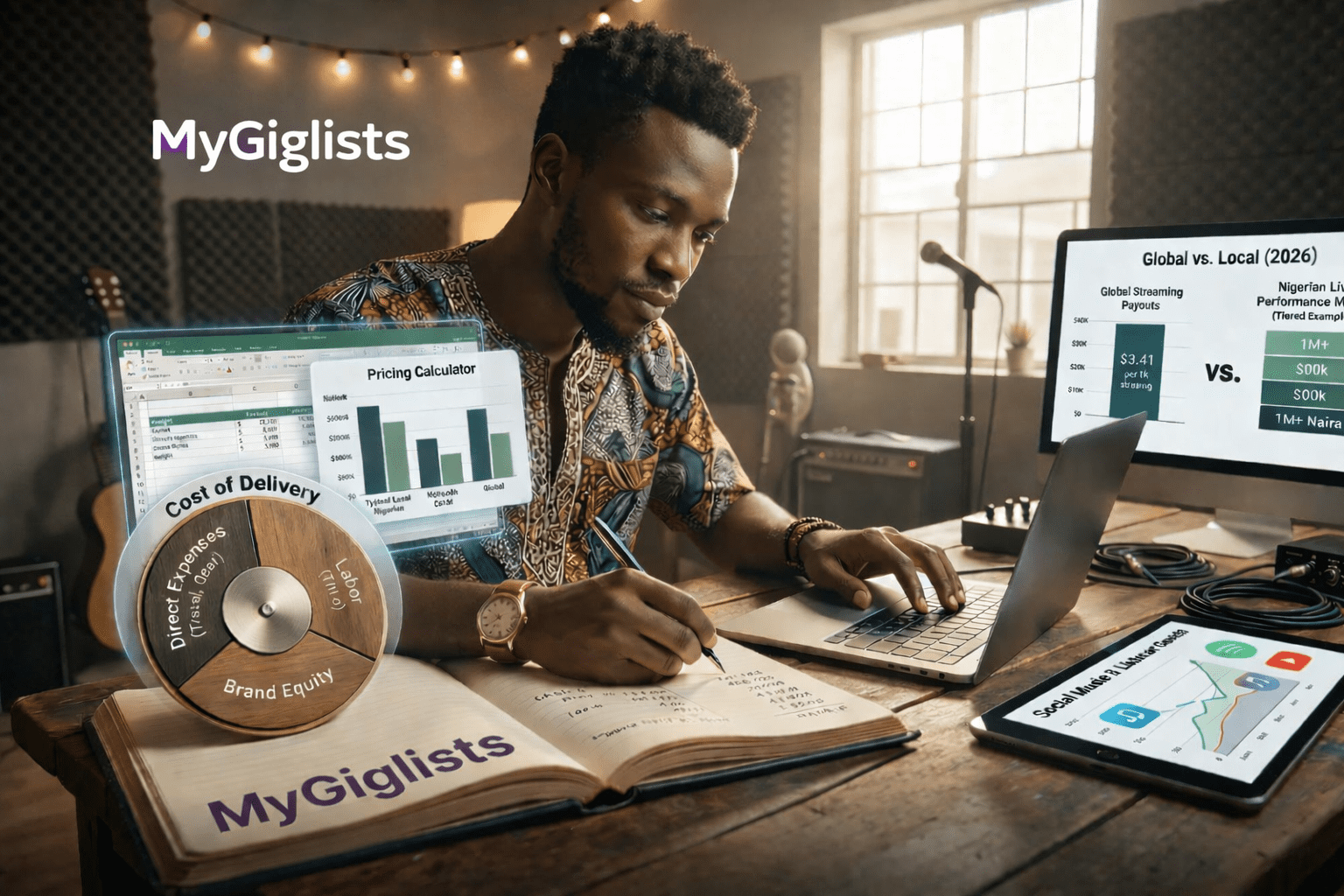
Globally, the industry is shifting. According to the Duetti 2024/2025 Report, average earnings per 1,000 streams
have stabilized at approximately $3.41. While that may appear reasonable, for the independent artist streaming
remains a long-term strategy that rarely covers immediate expenses. In Nigeria, the narrative is more complex.
While the “Afrobeats to the World” movement has seen top-tier acts like Burna Boy and Wizkid command up to
$800k–$1M per show internationally, the middle-class independent artist is navigating a very different financial
reality. With the Nigerian music industry valued at over $600 million annually, the money exists — but it is highly
concentrated. For the average artist, pricing must account for a volatile Naira and rising production costs.
2. The ‘Cost of Delivery’ Framework
Stop choosing numbers randomly. Your price should be calculated. A. Direct Expenses
• Transportation for you and your crew
• Equipment maintenance and wear-and-tear
• Rehearsal studio costs and session musician stipends
• Wardrobe and grooming B. Labor (Time)
• Preparation time for rehearsals and arrangements
• Travel time and setup logistics
• Performance duration C. Brand Equity
Your visibility matters. Viral content, recent releases, audience growth, and demand all justify a 15–50% markup.
3. The Tiered Pricing Strategy
Tier
Description
Acoustic / Solo
Why it Works
Just you with a guitar, keyboard or backing track.
Low overhead and perfect for intimate events.
Essential Trio
Full Experience
You + bass + drums/percussion.
Provides a full live feel without the cost of a large band.
Full band with backing vocals and sound engineer.
High impact premium performance package.
4. Dealing with the Nigerian Factor
In Nigeria you will often hear phrases like: “Help us, the budget is tight,” or “We will give you exposure.” Exposure
does not buy fuel. However, flexibility can exist without damaging your market value. Instead of lowering your
price, reduce the scope of the service. Example:
“I cannot do 500k for a two-hour full-band show, but for 300k I can offer a 45 minute solo acoustic set.” This
protects your professional market rate.
5. Using Data as Your Lawyer
When promoters question your pricing, present data. • Spotify or Apple Music listener growth
• YouTube organic views and audience engagement
• Social media engagement rate and fan interaction A smaller but loyal audience is often more valuable than
inflated follower numbers.
Final Thoughts: The Psychology of ‘No’
The most difficult part of pricing yourself correctly is accepting rejection. However, a “No” to an underpaid gig is
often a “Yes” to your long-term brand value and mental wellbeing. When musicians consistently underprice their
work, the entire industry suffers. Professional pricing is not just personal protection — it is market leadership.
Know your costs. Track your data. And remember: If they want the vibe, they have to pay for the value.
The Price of the Sound: A Musician’s Guide to Valuation in 2026